
Wind-Powered Operation
Rotary turbine heads spin naturally using available wind energy without external power.
Discuss your upcoming PEB or industrial project with our team.
Steelbuild Turbo Ventilators provide efficient wind-driven natural ventilation by continuously exhausting hot air, moisture and stale indoor air without electricity, helping maintain healthier and more comfortable industrial environments.
Wind Powered
Natural Ventilation
Heat Extraction
Zero Power Consumption
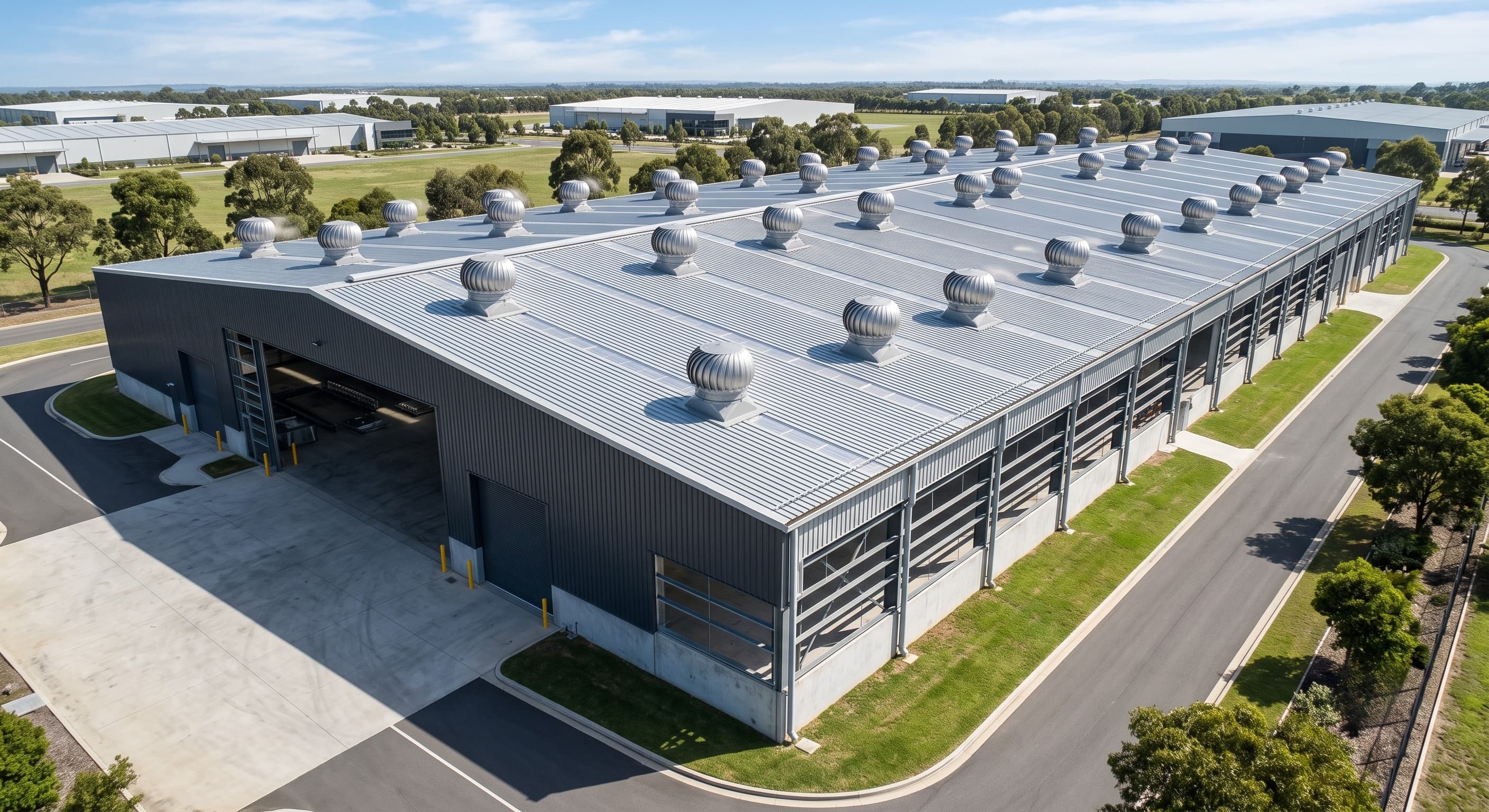
Wind-Driven Roof Ventilation
Industrial Turbo Ventilator System
Passive Roof Ventilation
Wind-Driven Rotation
01Rotates naturally using available wind energy.
Passive Ventilation
02Continuously removes trapped hot air.
Zero Electricity
03Operates without motors or electrical power.
Industrial Durability
04Weather-resistant construction for long service life.
Passive Roof Ventilation
Wind-powered turbo ventilators continuously improve indoor airflow while reducing heat accumulation and supporting energy-efficient industrial buildings.
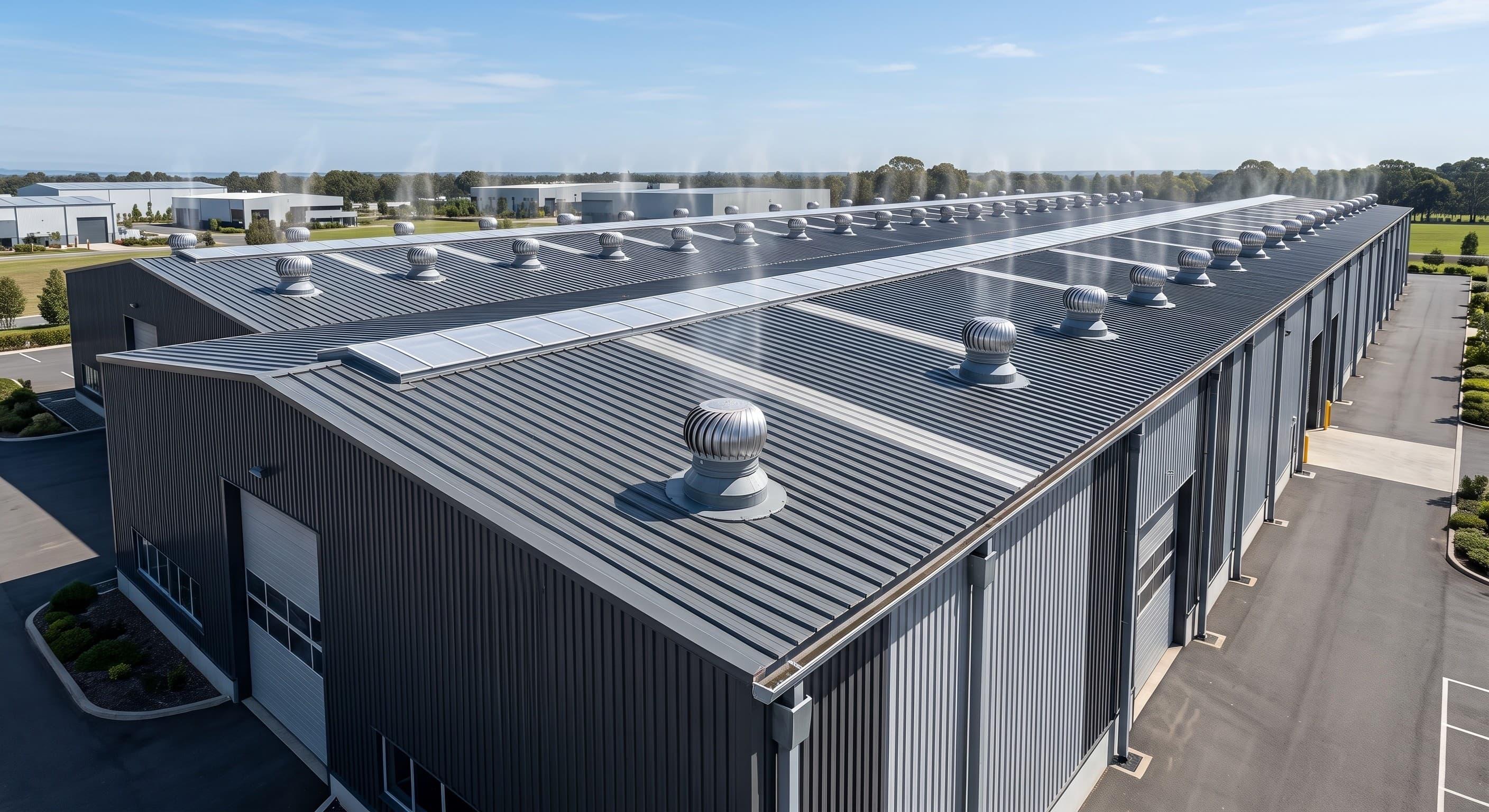
Wind-Driven Roof Ventilation
Industrial Turbo Ventilator Integration
Natural Air Extraction
Passive Ventilation Technology
Industrial turbo ventilators rotate naturally using wind energy to extract trapped hot air and improve continuous airflow throughout large industrial facilities.
Steelbuild Turbo Ventilators are engineered roof-mounted rotary ventilators that use natural wind energy to continuously remove hot air, humidity and stale air from industrial buildings. Their passive operation improves indoor comfort, reduces heat build-up and supports energy-efficient ventilation without requiring electrical power.
Rotary turbine heads spin naturally using available wind energy without external power.
Helps exhaust accumulated hot air and maintain healthier indoor working conditions.
Manufactured using corrosion-resistant aluminium or stainless steel for long service life.
Final turbo ventilator quantity, spacing, turbine diameter, roof penetration, base flashing and ventilation capacity are selected according to building volume, indoor heat load, roof geometry and approved project requirements.
Steelbuild Turbo Ventilators support natural heat extraction, improved indoor airflow and energy-efficient industrial ventilation through durable wind-driven operation.
Ventilation Advantage 01
Rotary turbine heads use natural wind movement to support continuous roof ventilation.
Ventilation Advantage 02
Operates without motors, wiring or electrical power, helping reduce operating costs.
Ventilation Advantage 03
Helps remove accumulated hot air from large industrial buildings and high-roof spaces.
Ventilation Advantage 04
Supports natural air movement and helps reduce stale air, humidity and indoor discomfort.
Ventilation Advantage 05
Durable aluminium or stainless-steel construction provides corrosion resistance and long service life.
Ventilation Advantage 06
Simple rotary construction and quality bearing systems support dependable operation with minimal maintenance.
Final turbo ventilator selection depends on building volume, roof height, indoor heat load, turbine diameter, expected wind conditions, ventilator spacing and approved ventilation requirements.
Turbine heads, curved vanes, shafts, bearings, ventilator throats, weatherproof flashings and roof supports work together as one coordinated passive ventilation assembly.
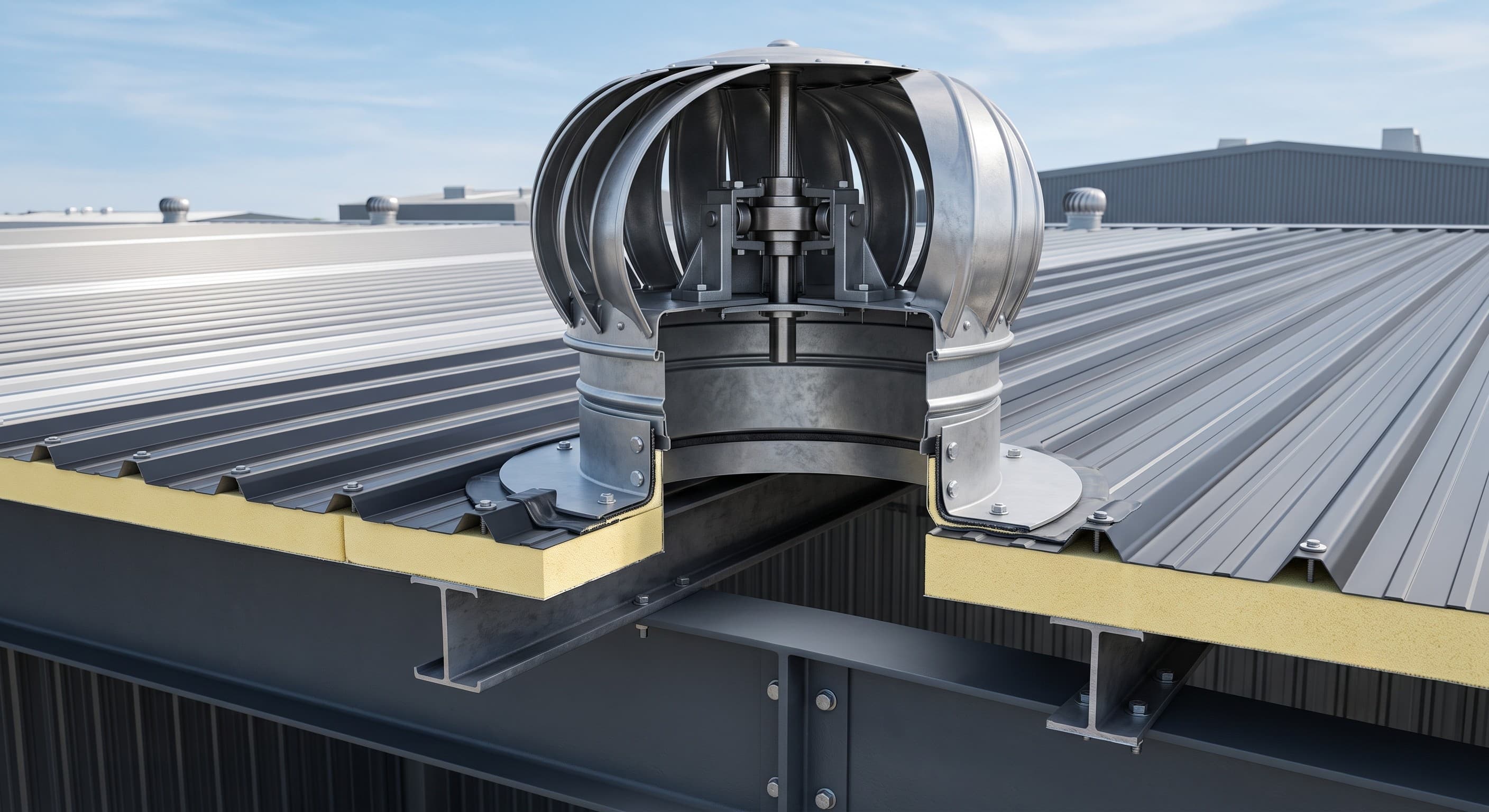
Wind-Driven Ventilator Assembly
Turbine, Bearings & Roof Integration
Major Ventilation Components
Turbine Head
Wind-driven rotary ventilation assembly
Curved Vanes
Aerodynamic wind-capturing blades
Shaft & Bearings
Controlled rotational support system
Ventilator Throat
Air passage through the roof opening
Base Flashing
Weatherproof roof integration
Roof Support
Roof sheets, purlins and steel framing
Ventilation System Coordination
Turbine rotation, shaft alignment, bearing performance, roof penetration and weatherproof flashing operate together as one complete industrial ventilation system.
Ventilator Component 01
Wind-driven turbine assembly that rotates to support continuous natural air extraction.
Ventilator Component 02
Aerodynamically formed vanes capture wind movement and maintain smooth turbine rotation.
Ventilator Component 03
Precision-aligned shaft supporting stable turbine movement and long-term rotational performance.
Ventilator Component 04
Low-friction bearing system enabling smooth wind-driven rotation with minimal maintenance.
Ventilator Component 05
Circular air passage connecting the rotating turbine head with the internal roof space.
Ventilator Component 06
Engineered mounting base and flashing providing sealed integration with the roofing system.
Ventilator Component 07
Approved roof fixings securing the ventilator base while maintaining weather resistance.
Ventilator Component 08
Coordinated installation with roofing sheets, insulation, purlins and supporting steel members.
Final turbine diameter, vane configuration, shaft and bearing selection, ventilator throat size, roof opening, base flashing, fastener arrangement and support details are developed according to approved project requirements, roof geometry and ventilation performance needs.
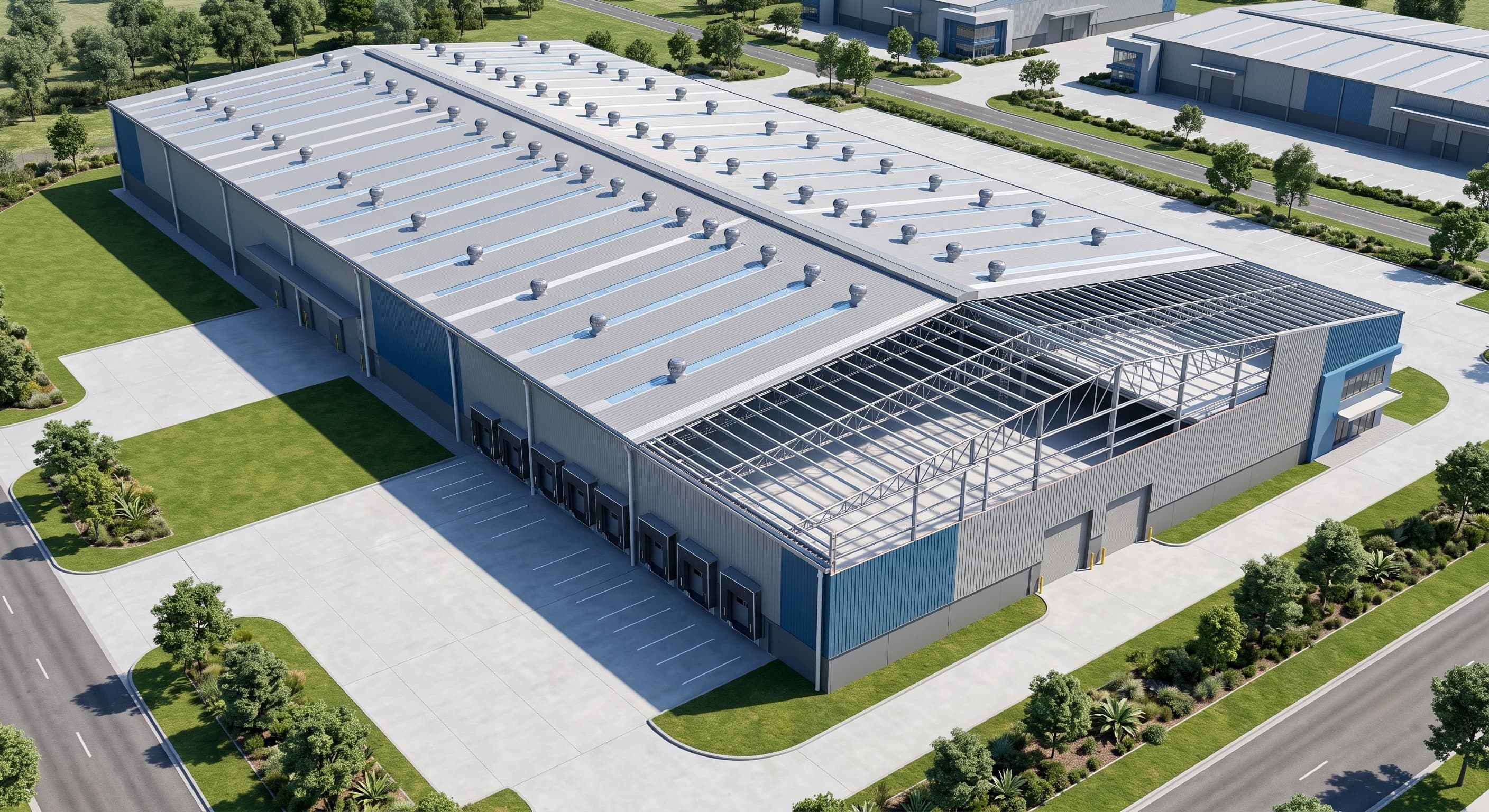
Steelbuild Turbo Ventilators support natural heat extraction and continuous airflow across manufacturing, warehousing, processing, agricultural and commercial-industrial buildings.
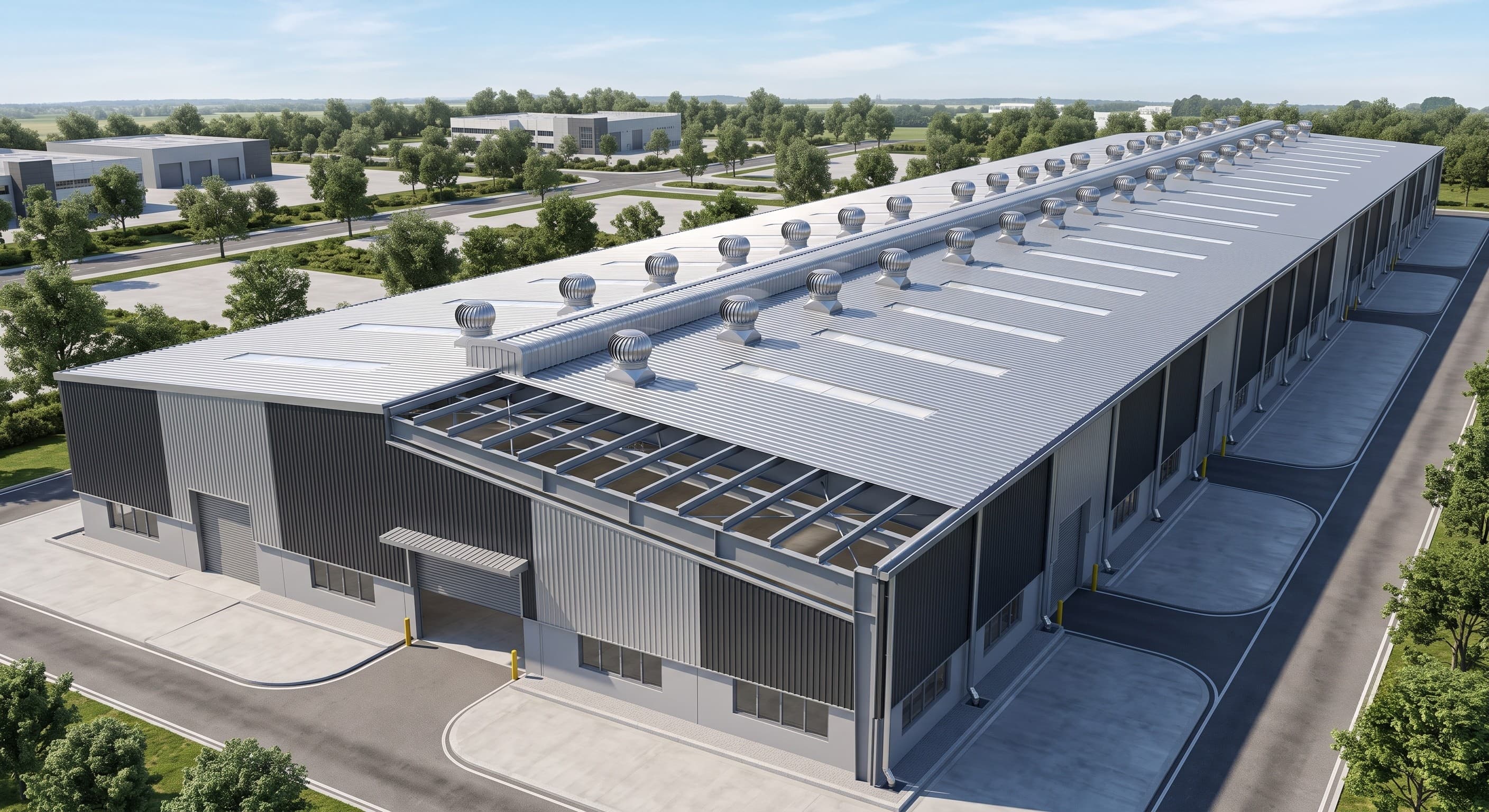 Application 01
Wind-driven roof ventilation for large production buildings, factories and industrial manufacturing plants.
Passive Roof Ventilation
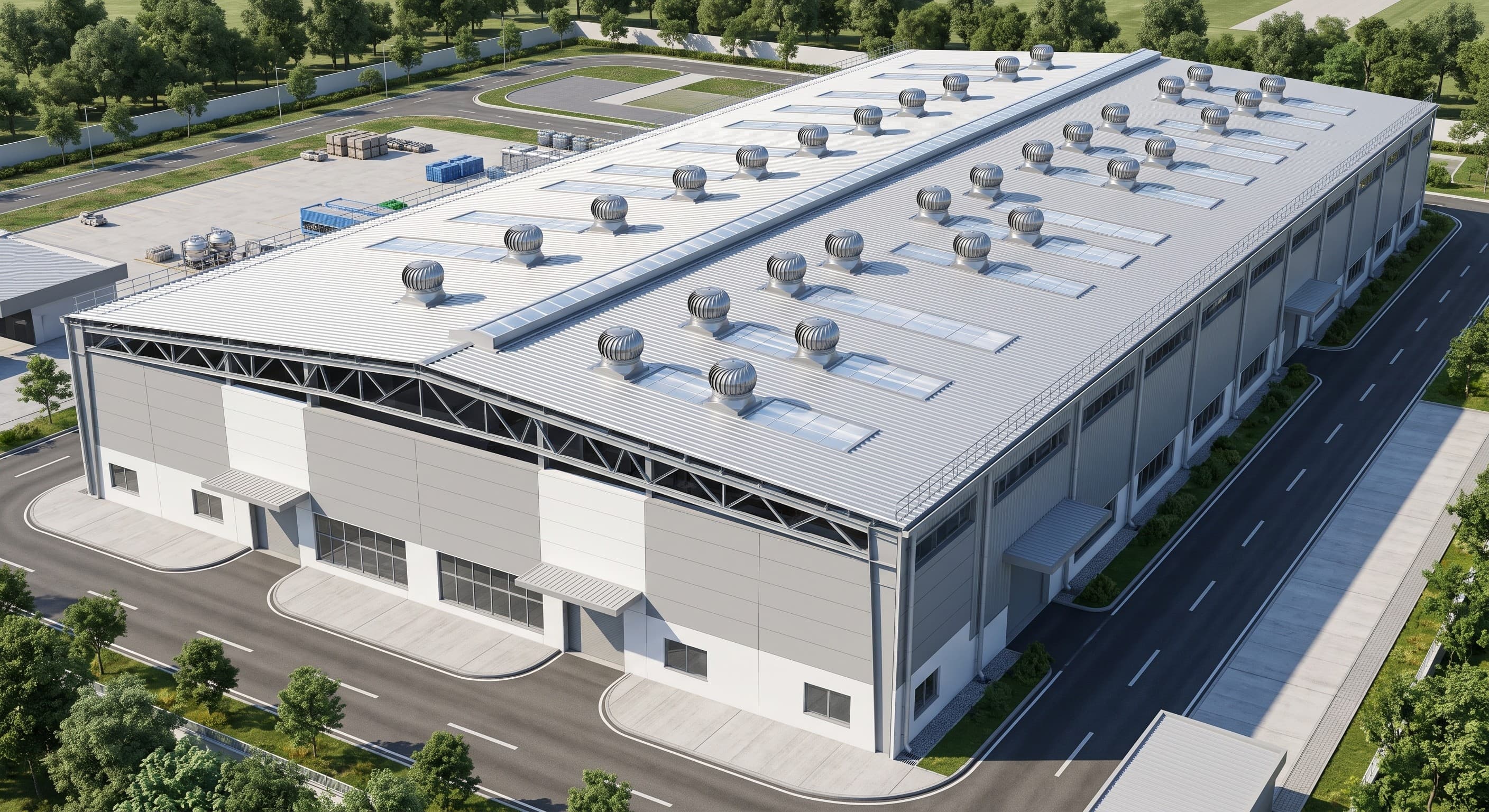
 Application 02
Passive ventilation for large-span warehouses, logistics hubs and distribution centres.
Passive Roof Ventilation
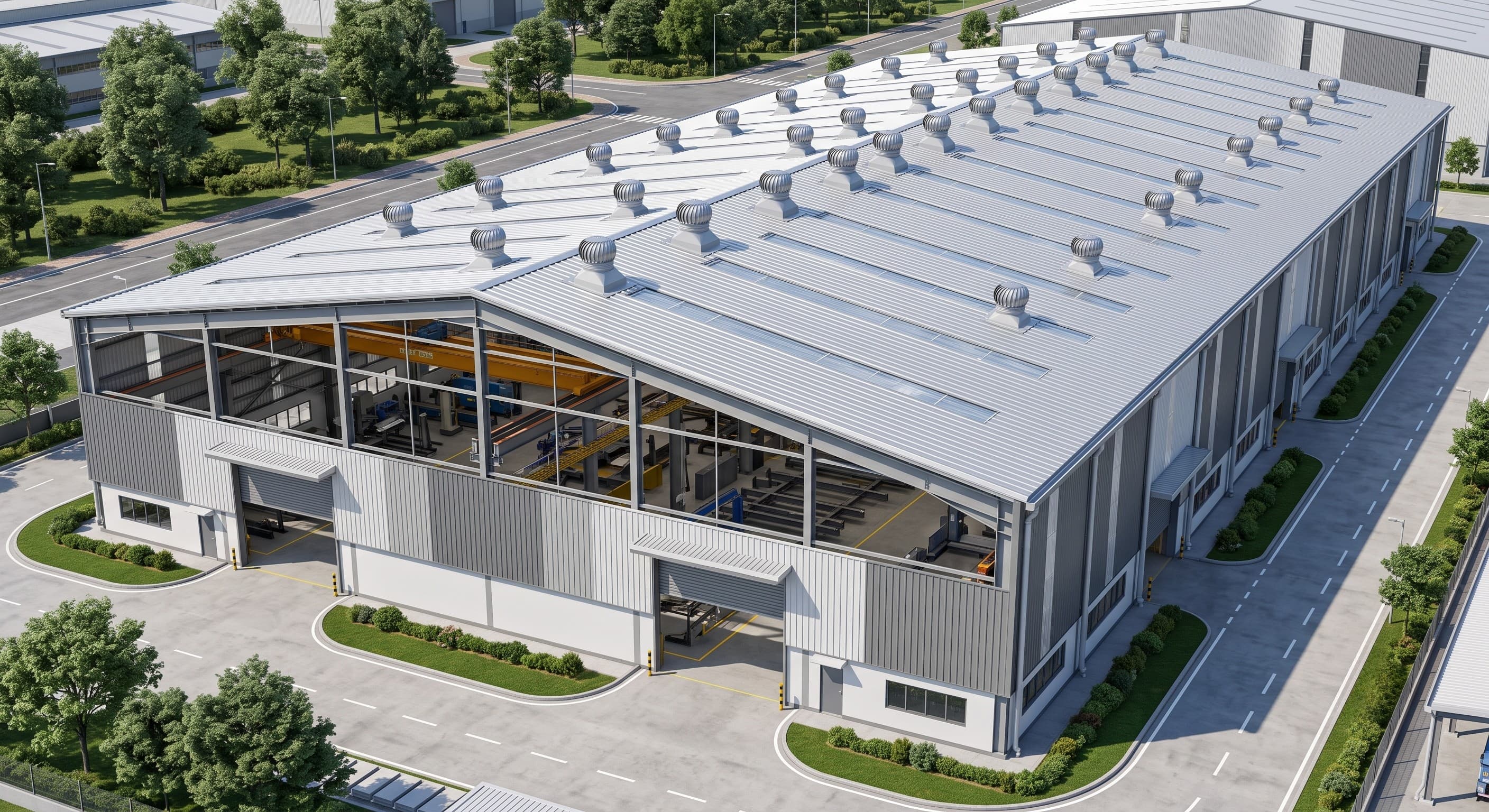
 Application 03
Natural extraction of trapped heat, humidity and stale air from clean food-processing environments.
Passive Roof Ventilation
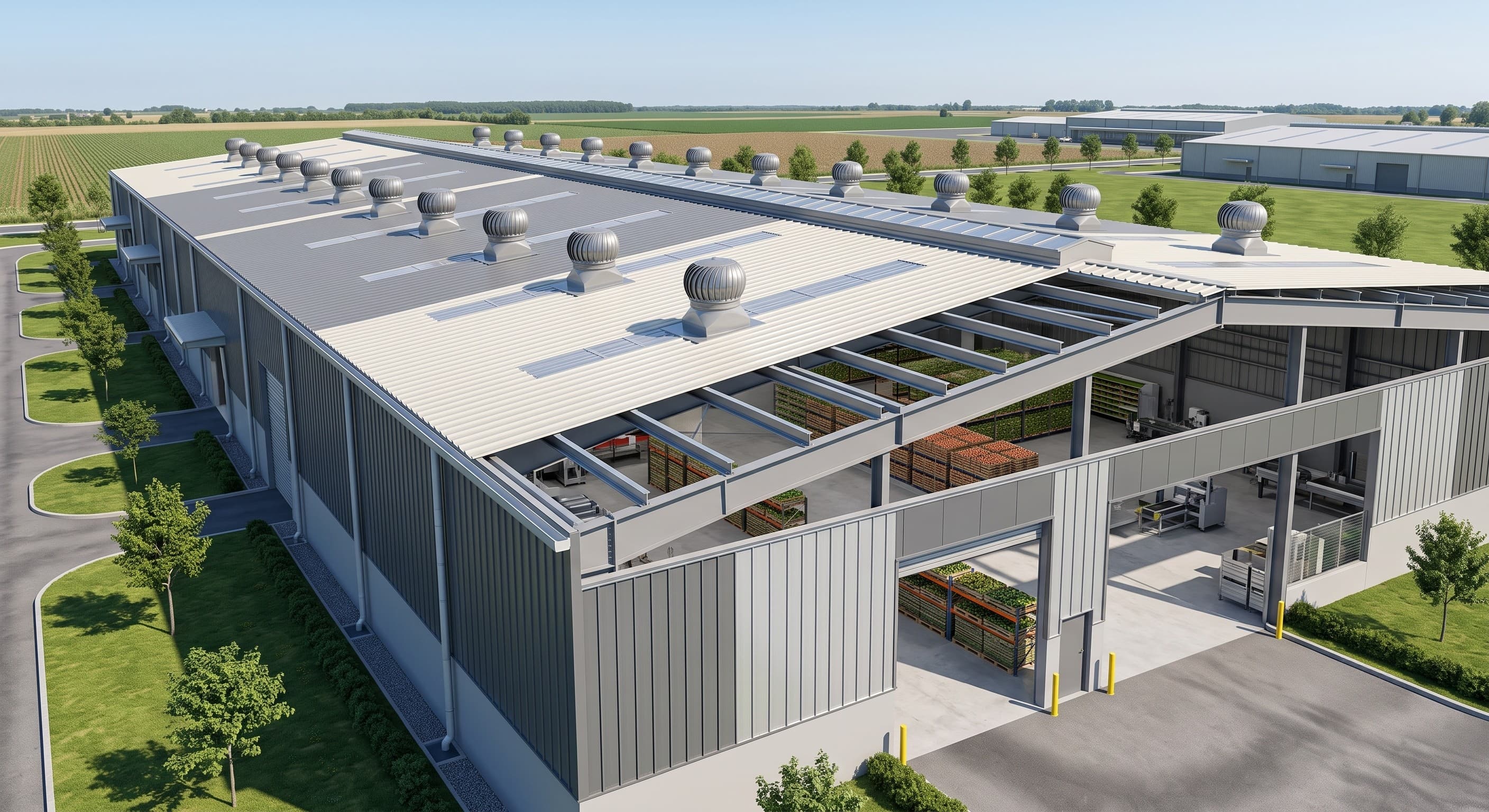
 Application 04
Continuous ventilation for high-bay engineering workshops and industrial maintenance buildings.
Passive Roof Ventilation
 Application 05
Passive roof ventilation for agro-processing, storage and agricultural utility buildings.
Passive Roof Ventilation
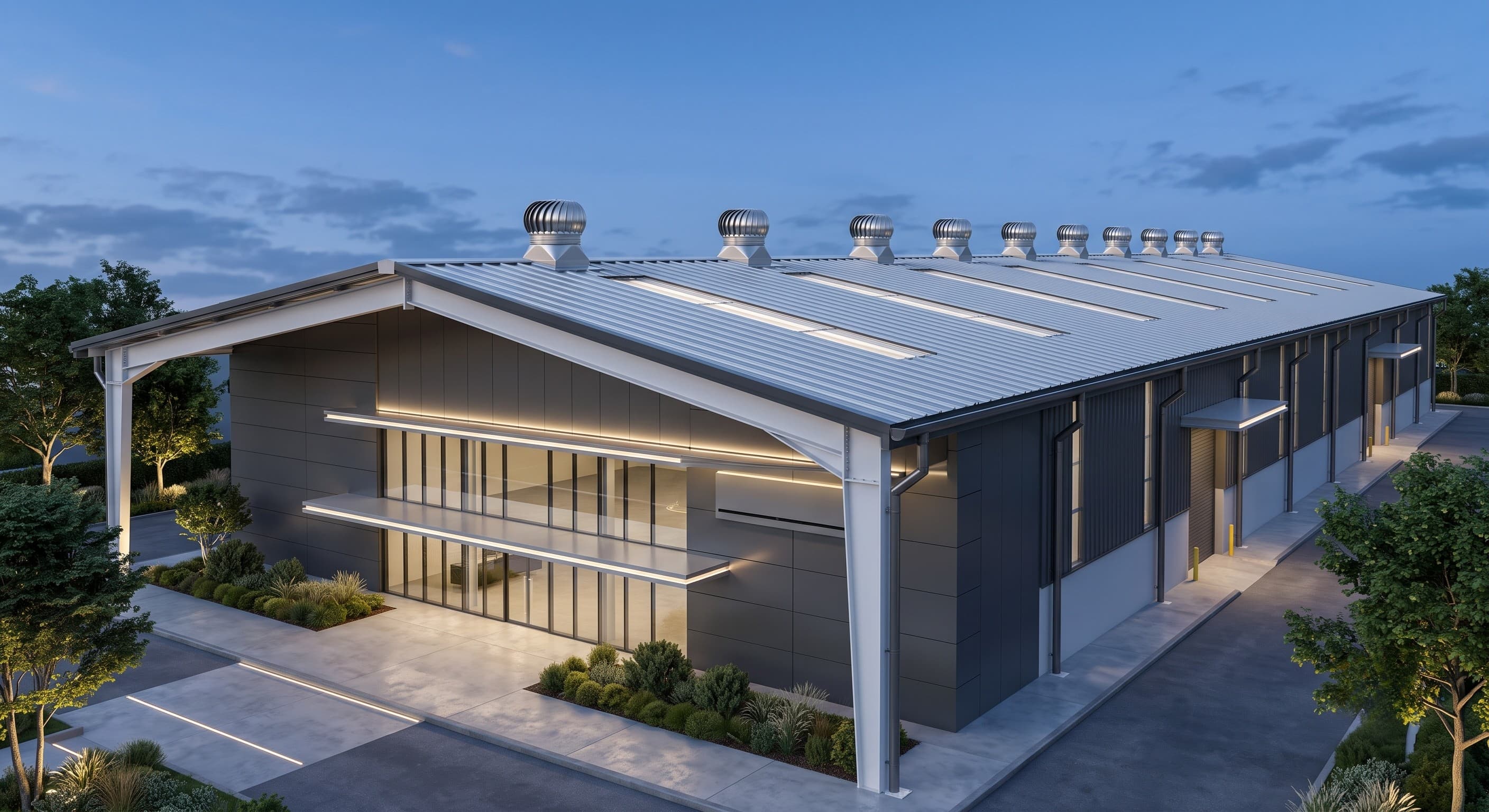 Application 06
Integrated turbo ventilation for contemporary commercial and industrial developments.
Passive Roof Ventilation
Turbo ventilator quantity, spacing, turbine diameter and roof layout are finalized according to building size, internal heat load, ventilation requirements and approved engineering calculations to achieve effective natural air extraction.
Every turbo ventilator project follows a coordinated process covering ventilation assessment, roof-layout planning, manufacturing, inspection, installation and final handover.
Process Step 01
Building volume, roof height, indoor heat load, airflow requirements and project conditions are reviewed.
Process Step 02
Turbo ventilator diameter, quantity, spacing and expected ventilation performance are finalized.
Process Step 03
Ventilator locations are coordinated with roof sheets, skylights, ridge lines, purlins and structural framing.
Process Step 04
Turbine vanes, rotary heads, shafts, bearings, throats and base assemblies are manufactured.
Process Step 05
Rotation, alignment, dimensions, bearing movement, material finish and assembly quality are inspected.
Process Step 06
Completed turbo ventilators are protected, packed, identified and prepared for safe project delivery.
Process Step 07
Ventilator bases, roof openings, flashings, fasteners and sealing details are installed according to approved layouts.
Process Step 08
Final rotation, weatherproofing, installation alignment and ventilation-system readiness are verified.
Turbo ventilator diameter, quantity, spacing, roof penetration, flashing, support arrangement and installation sequence are finalized according to building volume, indoor heat load, roof geometry and approved project requirements.
Steelbuild manufactures industrial turbo ventilators using precision fabrication, controlled assembly and stringent quality inspection to ensure dependable long-term performance.
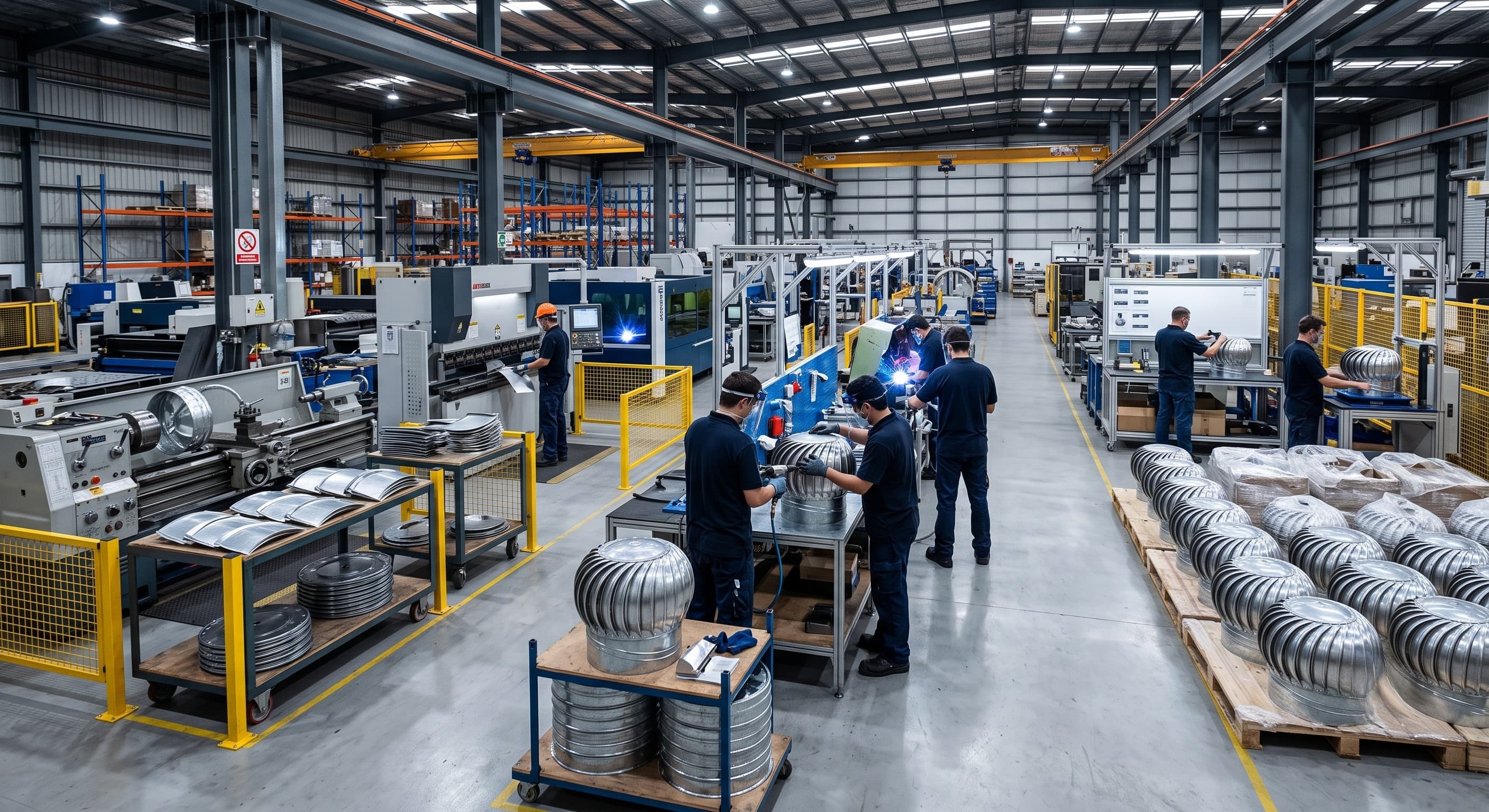
Industrial Manufacturing
Precision Fabrication & Assembly
Engineered Manufacturing
Controlled Quality
Every turbine head, shaft, bearing and base assembly is checked for dimensional accuracy, smooth movement and reliable long-term operation.
Manufacturing Process
The manufacturing process focuses on accurate turbine geometry, balanced assembly, dependable bearing movement and corrosion-resistant construction suitable for demanding industrial roof conditions.
Turbo ventilator components are manufactured using precision metal-forming processes to achieve accurate geometry and dimensional consistency.
Turbine heads, bearings, shafts and base assemblies are carefully integrated to ensure smooth wind-driven rotation and dependable performance.
Every ventilator undergoes inspection for dimensional accuracy, bearing movement, structural integrity and overall manufacturing quality.
Material selection, turbine geometry, bearing performance, balanced rotation, base fabrication and finished-product inspection are coordinated according to approved manufacturing requirements.
Deliver reliable passive roof ventilation using precision-engineered turbo ventilators designed for continuous heat extraction, long-term durability and efficient industrial building performance.
Natural Wind-Driven Ventilation
Zero Electrical Power Required
Durable Industrial Roof Systems